

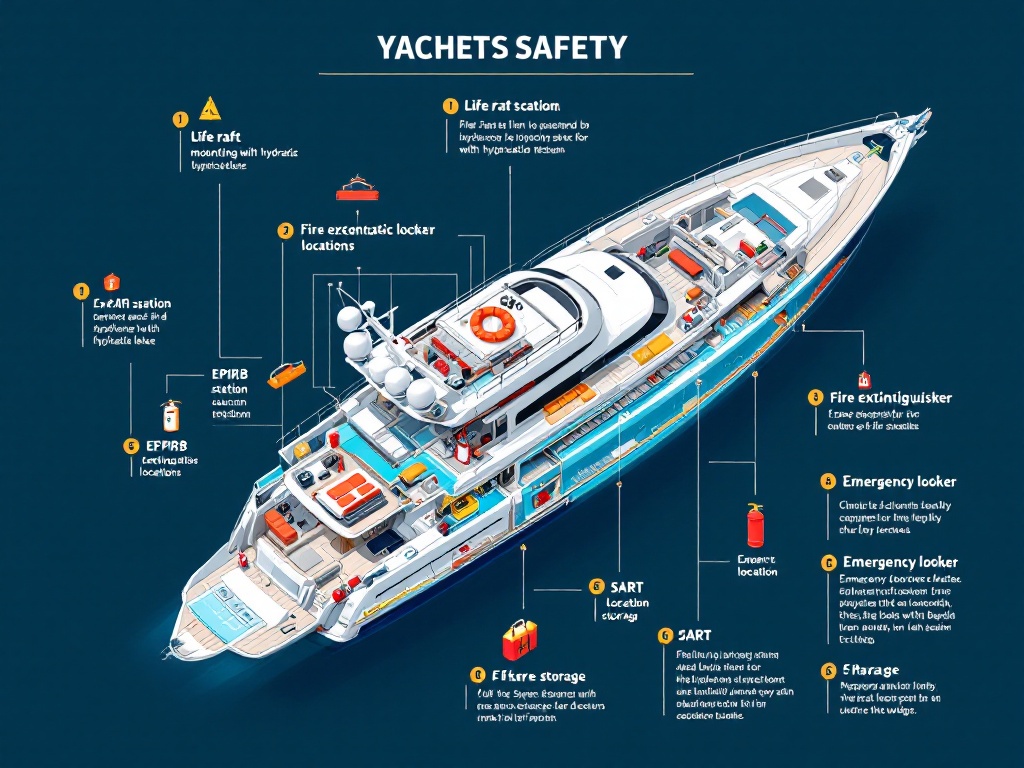
YACHT SAFETY SYSTEMS: COMPREHENSIVE GUIDE AND PRICING
<ol>
<li>Life Rafts</li>
</ol>
<p class="mb-2 last:mb-0">Coastal Life Rafts (4-8 Person):</p>
<ul>
<li>Basic coastal life rafts range from $1,500-2,500, featuring basic survival equipment pack, insulated floor, and canopy. These units typically have a 12-year service life with required annual inspections. The standard equipment includes basic flares, water, and essential survival gear</li>
<li>Installation costs add $300-500, including hydrostatic release unit (HRU), proper mounting cradle, and securing straps. The installation must consider quick release mechanisms and proper positioning for deployment. Professional installation ensures compliance with safety regulations</li>
<li>Annual certification and inspection costs $700-1,000, involving complete raft inflation, equipment check, and repacking by certified technicians. This includes replacement of expired items, pressure testing of inflation cylinders, and detailed documentation of all components</li>
</ul>
<p class="mb-2 last:mb-0">Offshore Life Rafts (4-12 Person):</p>
<ul>
<li>SOLAS approved offshore life rafts range from $3,500-7,000, featuring enhanced survival equipment, double floor insulation, and advanced stability systems. These units include extended survival equipment packs with additional water, food, and medical supplies</li>
<li>Professional installation with heavy-duty cradle system adds $500-800, requiring specific mounting locations and release mechanisms. Installation must consider vessel movement and ensure accessibility in emergency conditions.</li>
<li>Service intervals every 12-36 months depending on certification level, costing $800-1,200 per service. Extended service includes complete testing of all systems, replacement of time-sensitive items, and comprehensive documentation</li>
</ul>
<ol start="2">
<li>EPIRBs (Emergency Position Indicating Radio Beacons)</li>
</ol>
<p class="mb-2 last:mb-0">Category I EPIRBs:</p>
<ul>
<li>ACR GlobalFix iPRO ($850-950) features automatic hydrostatic release, 66-channel GPS, and strobe light. The unit provides global coverage through the COSPAS-SARSAT satellite system and includes a 10-year battery life</li>
<li>Ocean Signal SafeSea E100G ($700-800) includes integrated GPS, manual and automatic activation, and comprehensive self-testing capabilities. The unit features a 48-hour operational life at -20°C</li>
<li>Annual testing and registration required through national authorities, with battery replacement every 5-6 years costing $250-300. Professional testing includes verification of GPS acquisition and transmission power</li>
</ul>
<ol start="3">
<li>SART (Search and Rescue Transponder)</li>
</ol>
<p class="mb-2 last:mb-0">Radar SART:</p>
<ul>
<li>Jotron Tron SART20 ($500-700) provides 96-hour operational life with automatic activation when removed from bracket. The unit includes built-in test facilities and requires minimal maintenance</li>
<li>McMurdo S4 Rescue SART ($450-600) features enhanced battery life and robust construction for commercial applications. The system includes mounting bracket and comprehensive instruction manual</li>
<li>Five-year battery replacement costs approximately $150-200, requiring factory-authorized service center. Annual testing includes verification of radar response and battery condition</li>
</ul>
<ol start="4">
<li>Fire Fighting Equipment</li>
</ol>
<p class="mb-2 last:mb-0">Fixed Systems:</p>
<ul>
<li>FM200 system for engine room protection ($8,000-15,000) includes automatic and manual release options, with multiple sensors for fire detection. The system requires professional design and installation to ensure proper coverage and concentration</li>
<li>CO2 systems ($5,000-10,000) feature automatic shutdown of ventilation and fuel systems upon activation. Installation includes warning systems and proper crew training for safe operation</li>
<li>Annual inspection and certification ($500-800) includes pressure testing of cylinders, verification of release mechanisms, and testing of all sensors and alarms. Documentation must be maintained for compliance with safety regulations</li>
</ul>

Friendly & suitable opinions

Quality work done faster